
UFC Fight Night Recap: Main Card Analysis and Key Moments
UFC Fight Night delivered a card defined by tactical adjustments, controlled pacing, and decisive moments rather than chaotic exchanges. Across the main card, the most effective fighters were those who managed distance, conserved energy, and executed clear game plans under pressure.
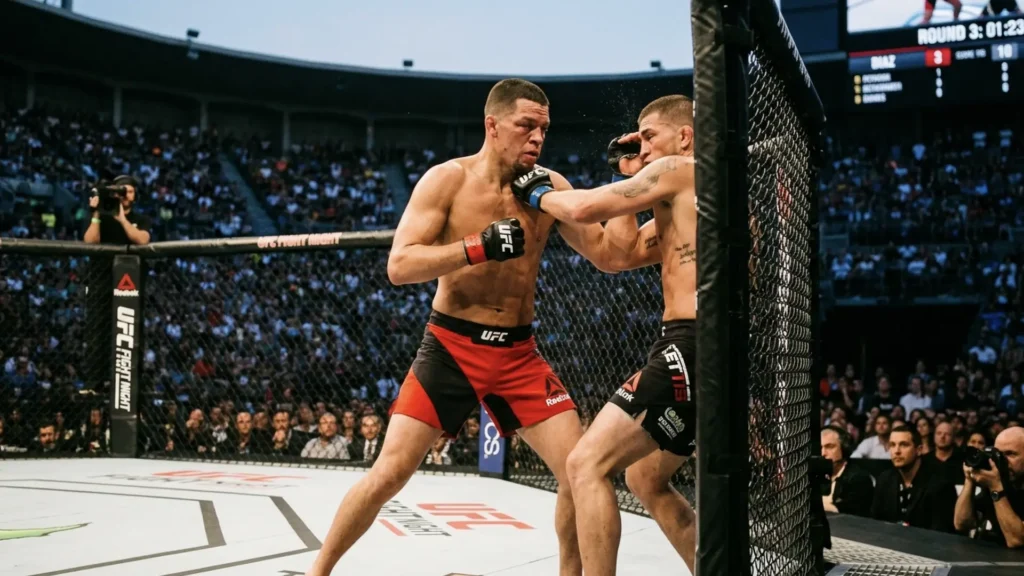
Main Event: Control Over Chaos
The main event highlighted the importance of control in high-level MMA. Rather than relying on early aggression, the winning approach focused on measured striking and positional awareness. By managing range and avoiding unnecessary exchanges, the fighter was able to dictate tempo throughout the bout.
Key moments came not from explosive combinations but from consistent pressure and clean execution. Well-timed counters and defensive awareness limited opportunities for the opponent to build momentum.
Striking Efficiency and Shot Selection
One of the defining patterns across the card was striking efficiency. Fighters who prioritized accuracy over volume had greater success. Instead of throwing extended combinations, they focused on landing clean shots and maintaining balance after each exchange.
This approach reduced exposure to counters and allowed for better defensive positioning. In contrast, fighters who relied on volume often became predictable and easier to time.
Grappling and Positional Control
Grappling exchanges played a critical role in several fights. However, success was less about takedown volume and more about control after the takedown. Fighters who maintained top position, controlled transitions, and avoided scrambles were able to secure rounds more consistently.
Attempts without control often resulted in reversals or wasted energy. This reflects a broader trend in modern MMA, where efficiency in grappling matters more than activity alone.
Cardio and Fight Management
Endurance remained a key factor, particularly in later rounds. Fighters who managed their pace early were able to maintain output and decision-making clarity throughout the fight. Those who pushed too aggressively early showed noticeable decline in both speed and precision.
Cardio is not just about conditioning — it directly impacts technique. As fatigue sets in, positioning weakens, reactions slow, and defensive gaps appear.
Defensive Awareness
Another important element was defensive discipline. Fighters who maintained guard positioning, head movement, and awareness during transitions were able to avoid unnecessary damage.
In several bouts, defensive mistakes rather than offensive brilliance led to critical turning points. A missed block or poorly timed entry often created openings that decided rounds.
Key Takeaways from the Card
- Controlled pacing is more effective than early aggression
- Accuracy in striking consistently outperforms volume
- Grappling success depends on positional control, not just takedowns
- Cardio directly influences execution and decision-making
- Defensive discipline prevents momentum shifts
Final Thoughts
This UFC Fight Night reinforced a consistent pattern seen across recent events. The fighters who succeed are not necessarily the most aggressive, but the most efficient. By managing distance, conserving energy, and executing with precision, they are able to control both the pace and outcome of the fight.
As competition continues to evolve, these fundamentals remain the foundation of success in modern mixed martial arts.