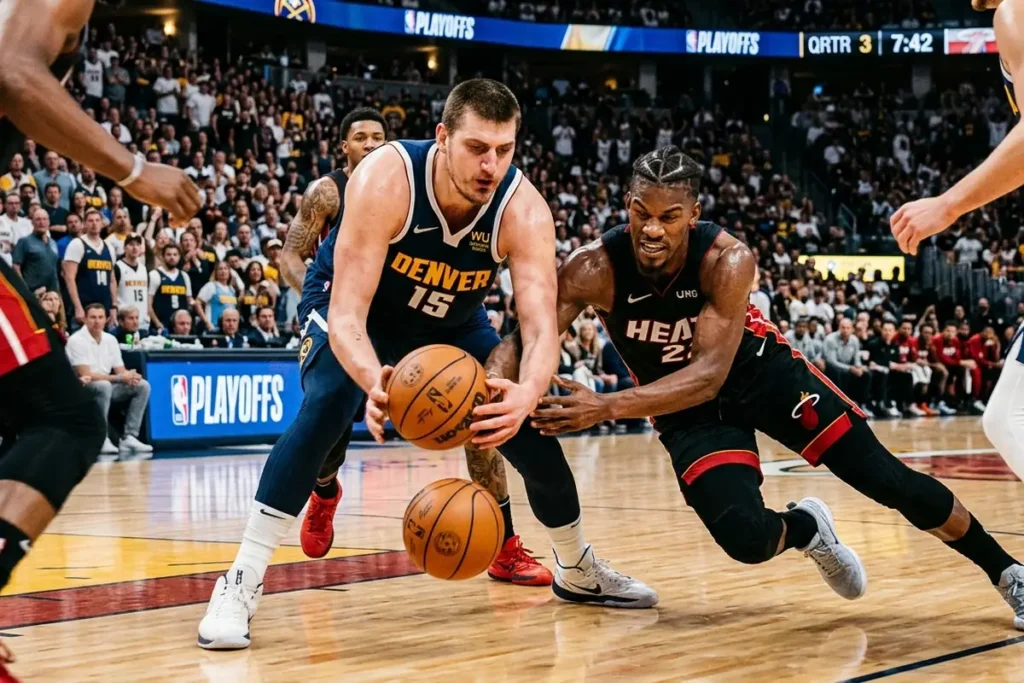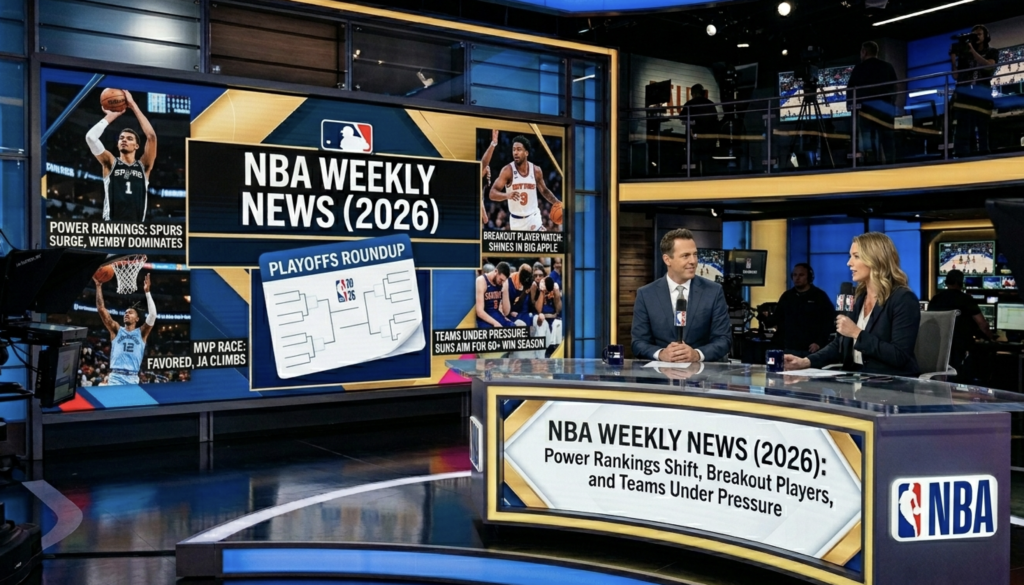
NBA Weekly Breakdown: Top Performances and Game Highlights
This week in the NBA was defined by high-efficiency scoring, improved ball movement, and teams adapting to faster offensive pace. While highlight plays dominated attention, the most successful teams were those that maintained structure and controlled possessions throughout games.
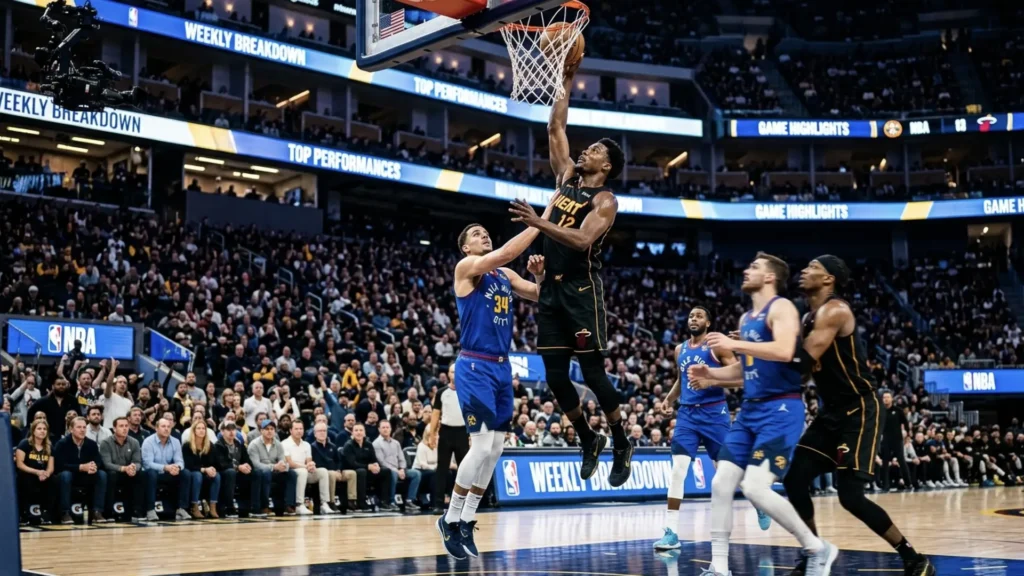
Top Performances of the Week
Several players delivered standout performances, not only in scoring but in overall impact. Efficient shooting, smart shot selection, and the ability to create opportunities for teammates were consistent patterns among top performers.
Rather than relying on isolation plays, the most effective players operated within offensive systems. This allowed teams to maintain flow and reduce defensive pressure over extended stretches.
Ball Movement and Offensive Flow
One of the clearest trends this week was the importance of ball movement. Teams that prioritized passing and spacing created higher-quality scoring opportunities and forced defensive rotations.
Quick decision-making and off-ball movement made offenses less predictable. In contrast, teams that relied heavily on individual plays struggled to maintain consistency, especially against disciplined defenses.
Defensive Adjustments
Defensively, teams focused on limiting perimeter shots and forcing contested attempts. Rotations were tighter, and help defense played a key role in disrupting offensive rhythm.
Successful defensive strategies were built around communication and positioning rather than aggressive risk-taking. Teams that maintained discipline were able to control scoring runs and shift momentum.
Pace and Game Control
The pace of play continues to increase across the league, but not all teams benefit equally. The most effective teams were those that could balance speed with control, pushing in transition while maintaining structure in half-court sets.
Fast pace alone does not guarantee success. Teams that rushed possessions often created inefficient shots, while those that controlled tempo produced more stable scoring.
Key Game Highlights
Several games this week demonstrated how quickly momentum can shift. Late-game execution, defensive stops, and disciplined offense were the deciding factors in close matchups.
Rather than relying on last-second plays, teams that executed consistently throughout the fourth quarter were able to close out games more effectively.
Emerging Patterns
- Efficiency is becoming more important than volume scoring
- Ball movement consistently creates better scoring opportunities
- Defensive discipline limits momentum swings
- Controlled pace outperforms uncontrolled speed
- Team structure is more reliable than individual performance
Final Thoughts
This week reinforced a broader trend across the NBA. Success is increasingly driven by systems rather than isolated performances. Teams that maintain spacing, move the ball effectively, and execute defensively are consistently outperforming those that rely on individual scoring.
As the season progresses, these patterns are likely to define team performance and playoff positioning. Understanding these dynamics provides a clearer picture of how games are actually won.
The same principle applies beyond sports. Structured systems, efficiency, and controlled execution are critical not only in team performance but also in technical environments.
The same principle applies beyond sports. Structured systems, efficiency, and controlled execution are critical not only in team performance but in many complex environments.
In engineering, similar patterns appear in how systems are designed and operated at scale, where discipline and structure define long-term reliability. For a technical perspective, see this engineering analysis.