MLB Weekly News Roundup: The Biggest Baseball Stories Across the U.S. This Week
This past week in Major League Baseball felt like the point where the 2026 season stopped being “early” and started becoming more defined. The standings are still young, but several clubs are already separating themselves with better pitching, cleaner late-inning execution, and more stable everyday lineups. As of April 22, the Dodgers and Padres are tied at 16-7 atop the National League West, the Braves lead the NL East at 16-8, the Reds top the NL Central at 16-8, and the Yankees sit first in the American League East at 14-9.
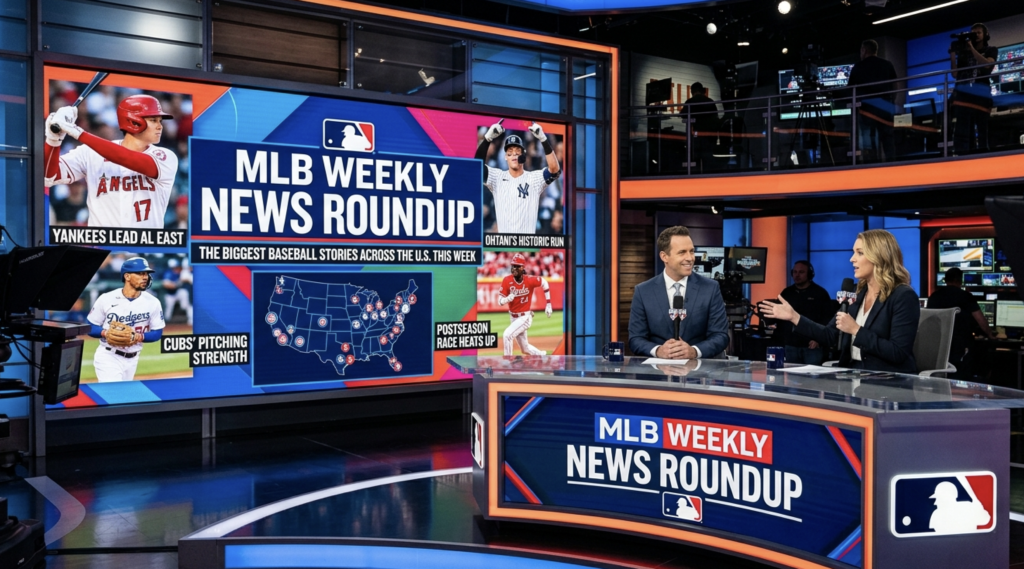
Across the league, this week was not just about wins and losses. It was about momentum, identity, and the bigger stories beginning to shape the national baseball conversation. Some clubs are proving they are built to contend over a long season. Others are already showing structural weaknesses, especially on the mound. At the same time, a few off-field storylines drew major attention and reminded fans that the MLB season is always bigger than the box score. :contentReference[oaicite:1]{index=1}
Dodgers and Padres Are Setting the Pace in the National League West
The National League West has been the most compelling division in baseball this week. The Dodgers and Padres both entered April 22 at 16-7, giving the division two of the best records in the sport and creating an early heavyweight race on the West Coast. San Diego also produced one of the week’s signature moments when Jackson Merrill delivered a walk-off double to complete a five-run ninth inning comeback against Seattle on April 15. That kind of win does more than add to the standings. It changes a team’s energy and reinforces belief inside the clubhouse. :contentReference[oaicite:2]{index=2}
The Dodgers, meanwhile, continued to look like a complete contender. One of the clearest examples came on April 15, when Shohei Ohtani struck out 10 batters over six innings of one-run ball against the Mets. That outing was a reminder that the Dodgers are not relying on offense alone. Their ability to get dominant starts, shorten games, and control matchups remains one of the strongest patterns in the league right now. :contentReference[oaicite:3]{index=3}
There was also major off-field news around San Diego this week. According to The Associated Press, the Padres are nearing a sale valued at approximately $3.9 billion, which would set a record for an MLB franchise valuation if approved. Even though it does not affect the lineup card tomorrow, it is a major national baseball story because ownership direction can shape payroll, roster decisions, and long-term organizational stability. :contentReference[oaicite:4]{index=4}
The Reds and Braves Continue to Look Like Serious Early Contenders
Cincinnati’s start is becoming harder to dismiss as a small-sample surprise. The Reds lead the NL Central at 16-8, ahead of strong competition from the Cubs, Cardinals, Brewers, and Pirates. That matters because the NL Central has been one of the deepest divisions in baseball so far, and holding first place in that environment suggests Cincinnati is doing more than just catching a hot streak.
Atlanta also continues to look like one of the National League’s most stable teams. The Braves lead the NL East at 16-8, and unlike some clubs that are living off explosive offense alone, Atlanta’s edge has come from balance and consistency. In April, that usually matters more than headlines. Teams that can avoid sloppy losses, manage innings well, and stay disciplined at the plate tend to build the most sustainable starts. The Braves have looked like that kind of team.
The American League Still Looks More Open
In the American League, the picture is less settled. The Yankees lead the AL East at 14-9, but no division in the league feels completely locked in. The Rays are only two games back at 12-11, Cleveland leads the AL Central at 14-11, and the Athletics top the AL West at 13-11 while the Rangers remain close behind at 12-11. Meanwhile, traditional powers like Houston have stumbled badly, sitting at 9-16 as of April 22.
That wider parity is one of the most interesting themes in baseball right now. In the National League, a few clubs already look like they know exactly who they are. In the American League, more teams still feel unresolved. That can change quickly, but it gives the AL a different texture entering the final full week of April.
Jackie Robinson Day Remained One of the Most Meaningful Moments of the Week
One of the most important stories across baseball this past week was not about a pennant race. On April 15, every MLB player, coach, and umpire wore No. 42 to honor Jackie Robinson on the 79th anniversary of his debut. Tributes took place across the league, including ceremonies at Dodger Stadium and recognition of Robinson’s lasting impact on baseball and American life. AP also reported that the percentage of Black players on MLB Opening Day rosters rose for the second straight year to 6.8%, adding important context to the significance of the day. :contentReference[oaicite:9]{index=9}
For a weekly recap, this matters because baseball’s most important national stories are not always transactional or statistical. Sometimes the biggest story is the way the sport connects its present to its history, and Jackie Robinson Day remains one of the clearest examples of that.
Boston’s Jarren Duran Incident Became a Major League-Wide Story
Another story that drew national attention this week involved Boston outfielder Jarren Duran. MLB and the Twins began investigating after Duran said a fan told him to kill himself during a game at Target Field. AP reported that Duran, who has publicly discussed past struggles with severe depression and a prior suicide attempt, reacted during the game and later spoke openly about how difficult those comments were to hear. :contentReference[oaicite:10]{index=10}
This story resonated far beyond Boston and Minnesota because it touched on a growing conversation in professional sports about player treatment, mental health, and fan behavior. Weekly baseball coverage should include that context, because it shaped the national discussion around the league as much as any single game result did.
Pitching Is Becoming the Biggest Separator
If there is one on-field trend that defined the week, it is this: strong pitching is separating contenders from everyone else. The Dodgers, Braves, Reds, and Padres all look better because they are getting enough quality innings to keep games under control. Individual outings like Ohtani’s 10-strikeout performance and low-scoring wins like San Diego’s 1-0 victory over Colorado on April 21 are signs of teams that can win in more than one way. :contentReference[oaicite:11]{index=11}
By contrast, struggling teams are often exposing the same weakness. They either cannot get enough from the rotation or are asking too much from the bullpen too early in the season. That becomes difficult to hide over six months, and the standings already reflect it in several divisions.
What to Watch Next Week
The next week should tell us whether these standings are beginning to harden or whether April volatility still has more surprises left. The biggest questions are straightforward. Can the Dodgers and Padres keep matching each other in the West? Can Cincinnati maintain first place in a crowded Central? Will the Yankees create real separation in the AL East? And can clubs like Houston or the Mets reverse poor starts before the early standings become a bigger problem?
At this stage of the season, it is not only about who wins. It is about how they win. Teams with stable pitching, better situational offense, and fewer sloppy mistakes are already giving themselves a much better chance to matter in the summer.
Final Thoughts
This week in baseball across the United States gave fans a more serious look at what the 2026 MLB season may become. The top of the National League is starting to look powerful and deep. The American League remains less settled. Big market clubs are still driving major headlines, but some of the most important developments are coming from teams simply playing cleaner, smarter baseball.
For now, the clearest takeaway is that April is no longer just warm-up time. The standings are beginning to carry meaning, the biggest teams are beginning to reveal their strengths, and the national conversation around baseball is already taking shape.