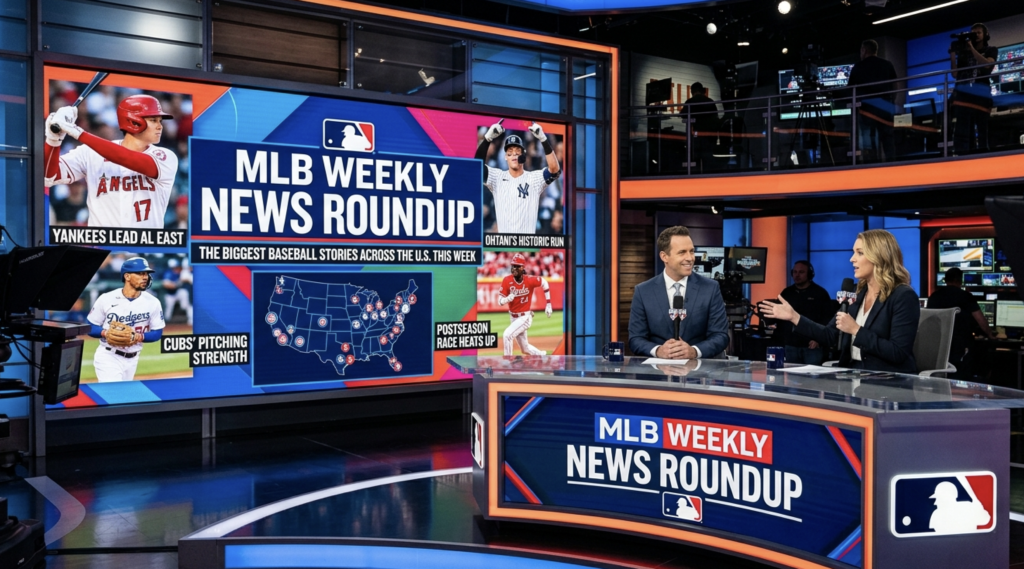
MLB Weekly Review: Pitching Trends, Offensive Efficiency, and Key Game Moments
This week in Major League Baseball highlighted a growing divide between teams that rely on structured execution and those that depend on isolated offensive bursts. While scoring remains a key metric, the underlying factors driving wins are increasingly tied to pitching efficiency, situational awareness, and disciplined play across all innings.

Pitching Trends and Rotation Management
Teams continue to shift away from traditional pitching roles. Starting pitchers are being used more strategically, with a focus on matchup control rather than innings volume. Managers are prioritizing efficiency, often turning to bullpen support earlier in games to maintain control.
This approach reduces exposure and allows teams to manage high-leverage situations more effectively. Pitchers who maintain command and limit walks are proving far more valuable than those relying solely on velocity.
Offensive Efficiency Over Raw Production
Offensive output across the league remains strong, but efficiency is becoming the key differentiator. Teams that produce runs consistently through controlled at-bats are outperforming those that rely on sporadic power hitting.
Plate discipline, pitch selection, and the ability to extend at-bats are driving more stable offensive performance. This is particularly evident in late innings, where patience often leads to better scoring opportunities.
Situational Execution in Close Games
Close games this week reinforced the importance of situational execution. Productive outs, sacrifice plays, and timely hitting continue to play a decisive role. Teams that execute these fundamentals consistently are able to convert limited opportunities into runs.
In contrast, missed opportunities with runners in scoring position remain one of the biggest factors separating winning and losing teams.
Defensive Reliability
Defense remains a critical but often overlooked component. Clean fielding, accurate throws, and effective positioning reduce unnecessary pressure on pitching staff. Teams that minimize errors are able to maintain momentum and control game flow.
Even small defensive lapses can shift the outcome of tightly contested games, especially when combined with strong opposing pitching.
Bullpen Impact on Game Outcomes
Late-inning performance continues to define results across the league. Bullpens are no longer just support units — they are central to game strategy. Managers are using relievers based on matchups rather than fixed roles, creating more flexibility in high-pressure situations.
Teams with reliable bullpen depth are closing games more effectively, limiting scoring chances and preserving leads.
Key Patterns Emerging This Week
- Pitching efficiency is more valuable than workload
- Disciplined hitting creates consistent scoring opportunities
- Situational execution determines close games
- Defensive stability reduces pressure on pitching
- Bullpen strategy is critical in late innings
Final Thoughts
This week’s games emphasized a consistent trend in modern baseball. Success is built on control, efficiency, and execution rather than isolated moments of power. Teams that manage these elements effectively are better positioned to maintain performance over the course of the season.
As competition continues to evolve, the importance of structure and discipline will remain central to winning baseball.